
Some stories only become “news” when the spotlight arrives, when leaders fly in, cameras roll, and a place is briefly transformed into a global stage. But the underlying issue is almost always older, deeper, and still unfolding after the delegates leave. That is why we are returning to COP30 now.
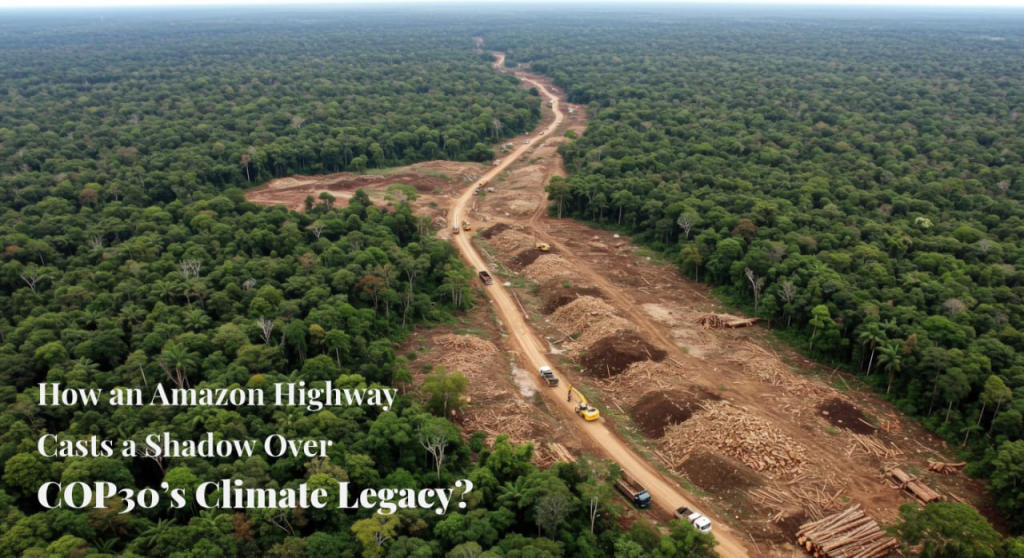
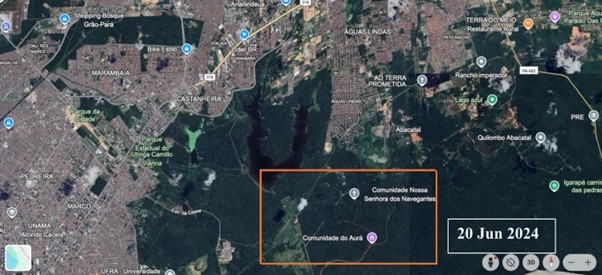
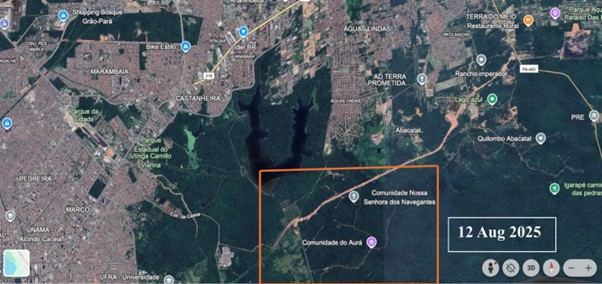
COP30, held in Belém, Brazil (10 to 21 November 2025), was meant to be a landmark moment: climate diplomacy on the doorstep of the Amazon, the world’s most iconic rainforest. Yet running alongside the negotiations was a parallel narrative that captured the world’s attention for all the wrong reasons: Avenida Liberdade, a four-lane highway cutting through a protected rainforest area close to the host city. Although the project was originally Planned in 2012, as a part of a long-term region mobility planning, its Completion just month before COP30 has widespread debate. The timing invited scrutiny regarding the alignment between environment values and infrastructure decision, and for many observers It has become a symbolic representation of the tension between climate rhetoric and real-world priorities. And how choices made for development are normalised.
A long-planned road, delivered at a politically perfect or rather imperfect moment The Pará state government has insisted the road was not built for COP30, noting that planning long predated the summit and that construction started before Belém was selected as host. (Reference) . That may be true, and it matters for accuracy. But perception matters too. Reuters reported that while officials denied a COP link, critics argued that summit preparations created momentum for a long-debated project. Even if COP30 did not “cause” the highway, the timing of its completion so close to the summit invited a basic question: when the world is watching, what signals do we send about what we prioritise, and what we are willing to disturb to make logistics easier?
Why the ecological echochamber is not a side-story
In sensitive forest landscapes, roads are not neutral. They can fragment habitat, create barriers for wildlife movement, and intensify edge effects, which can increase vulnerability to fire and invasive species while altering microclimates. Reporting around Avenida Liberdade highlighted exactly these concerns, including the risk of secondary deforestation patterns associated with new access routes.In other words, the core problem is not only the land cleared for the road itself. It is the cascade of impacts that can follow once a corridor exists, and once previously buffered areas become easier to reach. From a climate perspective, the contradiction is hard to ignore. Forest clearance and construction-related disturbance work against the very objectives a COP in the Amazon is supposed to reinforce. This is why many analysts treated the highway as more than an infrastructure project. It became a test of coherence.
A Summit marked by contradictions
The highway controversy was not the only signal that raised eyebrows.
One of the most widely discussed issues was the presence of more than 1600 fossil fuel lobbyists, who outnumbered nearly every national delegate, except the host.(Reference) This participation raised concerns about the political influence of carbon intensive industries on negotiation. The optics are troubling: negotiations designed to accelerate the fossil fuel transition taking place in halls where fossil fuel influence remains both normalised and organised.
Second, private aviation again became part of the climate summit story. One analysis counted approximately 350 private aircraft, generating an estimated 40,000 tons of CO2, sparking further criticism (Methodology and reference). Even without overstating the number, the broader point stands: private jets are a disproportionately high-emitting form of travel per passenger, and their growing footprint has become a recurring symbol of climate inequality.
Why this matters: a battle between optics and action.
The Amazon is not a backdrop. It is a living system with global consequences. When infrastructure decisions in ecologically sensitive zones coincide with the world’s highest-profile climate gathering, they do more than create controversy. They shape trust.
Climate action depends on credibility. It depends on consistency between what is pledged in negotiation rooms and what is permitted in the landscapes those pledges claim to protect. When the public sees climate diplomacy paired with forest fragmentation, lobbyist-heavy participation, and high-carbon travel norms, the risk is not only reputational. It is structural. People disengage. Communities doubt intentions. And the space for difficult, necessary transitions narrows.
What should remain in focus after the headlines
The Avenida Liberdade episode is ultimately a reminder that climate leadership is not measured only by targets and communiqués. It is measured by governance choices, land-use decisions, enforcement capacity, and the willingness to treat ecosystems as non-negotiable infrastructure.
If COP30 is to leave a legacy worthy of the Amazon, it will not be through rhetoric alone. It will be through visible alignment: transparent planning, robust environmental safeguards, meaningful local participation, and a clear commitment that “hosting climate talks” does not justify ecological compromise.

