

CONTEXT
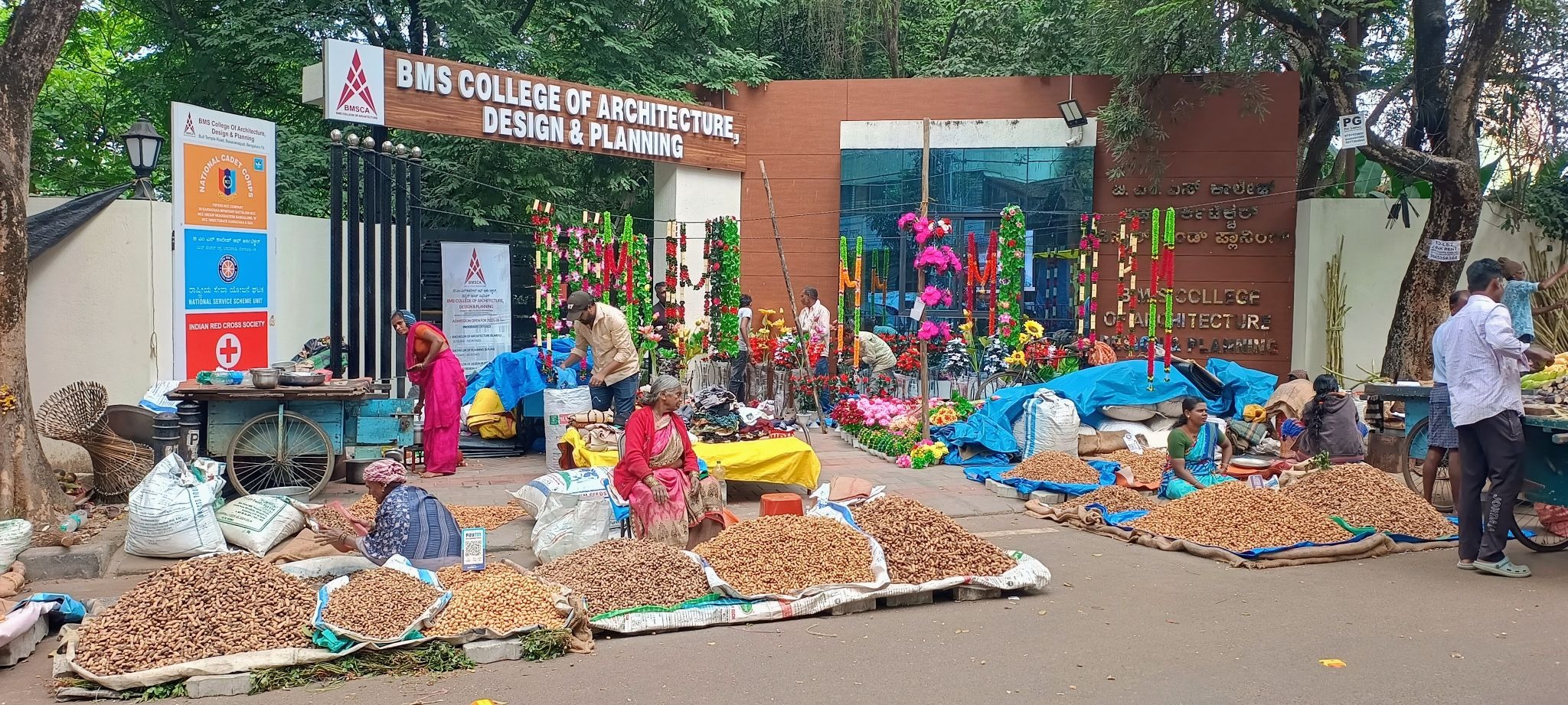
Kadale Kai Parishe is a major cultural event in Bengaluru that brings thousands of visitors to the Bull Temple area in Basavanagudi. Like many large public gatherings, the event creates a significant waste challenge. Single-use plastics from vendor transactions, such as bags, containers, and packaging, often lead to littering, which clogs municipal waste systems and creates a heavy clean-up burden for local authorities and the community.
A group of residents, environmental advocates, and social entrepreneurs worked to see if the festival could reduce its plastic use without affecting the event’s traditions or local business. Instead of focusing only on rules and enforcement, the team addressed waste management as a practical challenge. This involved partnering with vendors, involving local institutions, and providing alternatives that made it easier to avoid plastic.
This report covers how the group planned and carried out the initiative across the festival. The effort reduced plastic waste, helped vendors become more comfortable with using alternatives, and established a process that can be used for other large public events in Bengaluru and other cities.
OBJECTIVE
The goal of this project was to find a practical way to reduce single-use plastic at the festival. The approach needed to be easy for others to use in the future, while ensuring that vendors could still make a living and visitors had a good experience. It also had to work without needing expensive equipment or large investments. Ultimately, the project aimed to show that a traditional celebration can also be environmentally responsible.
SCOPE
The project covered all aspects of the festival. Preparation started eight weeks before the event and included planning and recruiting volunteers. The team created a local supply chain for bags by training students to make paper and cloth versions. By involving schools, the project produced the necessary materials while also teaching students and their families about waste management.
Instead of focusing only on enforcement, the team treated vendors as partners and provided direct support to help them switch to alternatives. During the festival, the team coordinated bag distribution, addressed issues as they happened, and gathered feedback. The results and methods were recorded throughout the process to help other organizers follow a similar model.
THEORY OF CHANGE
The project was based on a simple idea: if the festival has affordable and easy-to-use alternatives to plastic, and if local schools and vendors work together, plastic use will decrease. At the same time, this helps the community develop better habits for the future.
This approach focused on three main points.
- People often use plastic because other options are not available when they are buying something; providing alternatives addresses this issue.
- Vendors are willing to switch to sustainable practices if the new options are affordable and easy to manage.
- When students and community members take an active role instead of just receiving information, they become more effective at encouraging others to change their habits.
INPUTS: PEOPLE, PARTNERSHIPS, AND RESOURCES
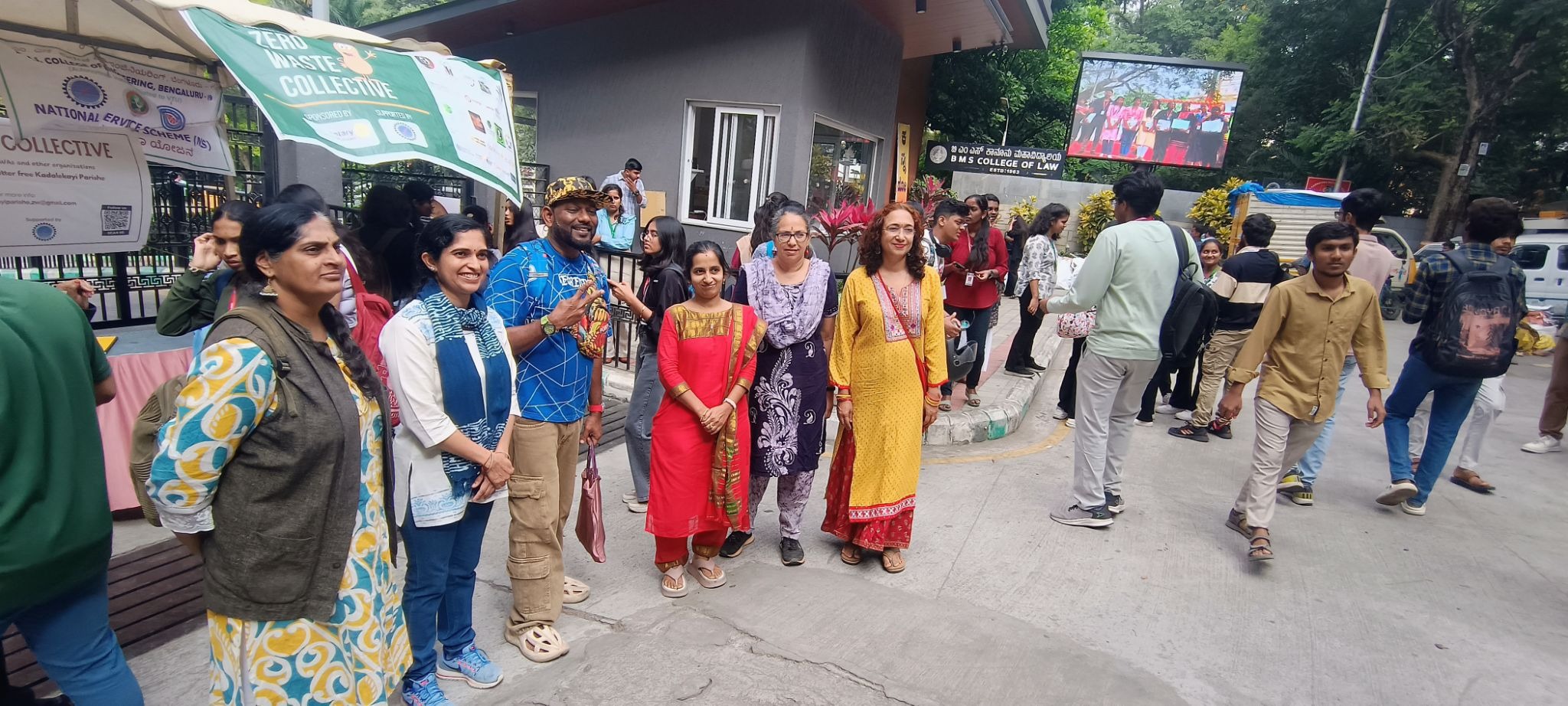
The project brought together different groups with specific roles. Hasiru Sele and the Zero Waste Collective (including RR iCare) managed the overall planning. Local residents from Basavanagudi provided community support and local knowledge. Teachers and students from seven schools and an engineering college helped make the bags and share information. Most importantly, vendors were treated as partners to help find solutions that worked for their businesses.
A volunteer group was set up to handle daily tasks and solve problems as they came up. This simple setup helped the team stay organized and make quick decisions during the busy festival days without unnecessary delays.
The materials used were chosen carefully. Instead of buying new supplies, the team used donated items. They collected old newspapers and brown paper from local shops and homes. They also gathered used cloth like sarees, curtains, and bedsheets from residents and tailors. Using these existing materials kept costs low and showed that effective alternatives can be made from items already available in the community.
Several local institutions provided space and volunteers, including Baldwin School, Jnanakshi School, Rashtrottana School, Swargarani School, Child’s Kingdom School, Udbhavaha School, and GAT Engineering College. These schools were essential for making the bags and helping students talk to their families about the importance of reducing plastic.
ACTIVITIES: WHAT WAS DONE AND HOW
Zero Waste Planning and Coordination
The work began by setting a clear goal: to reduce plastic bag use and replace it with affordable alternatives. This made it easier to decide how many bags were needed, what materials to get, and how many volunteers and students to recruit.
The team followed a steady schedule. The first two weeks were for training volunteers, followed by daily planning calls during bag production. During the festival, tasks were assigned daily to the team on the ground. A simple tracking system was used to record the number of bags made and distributed and to gather feedback from vendors and visitors. This allowed the team to make quick changes, send help where it was needed, and gather information to improve the process for next time.
Circular Supply Chain for Alternatives
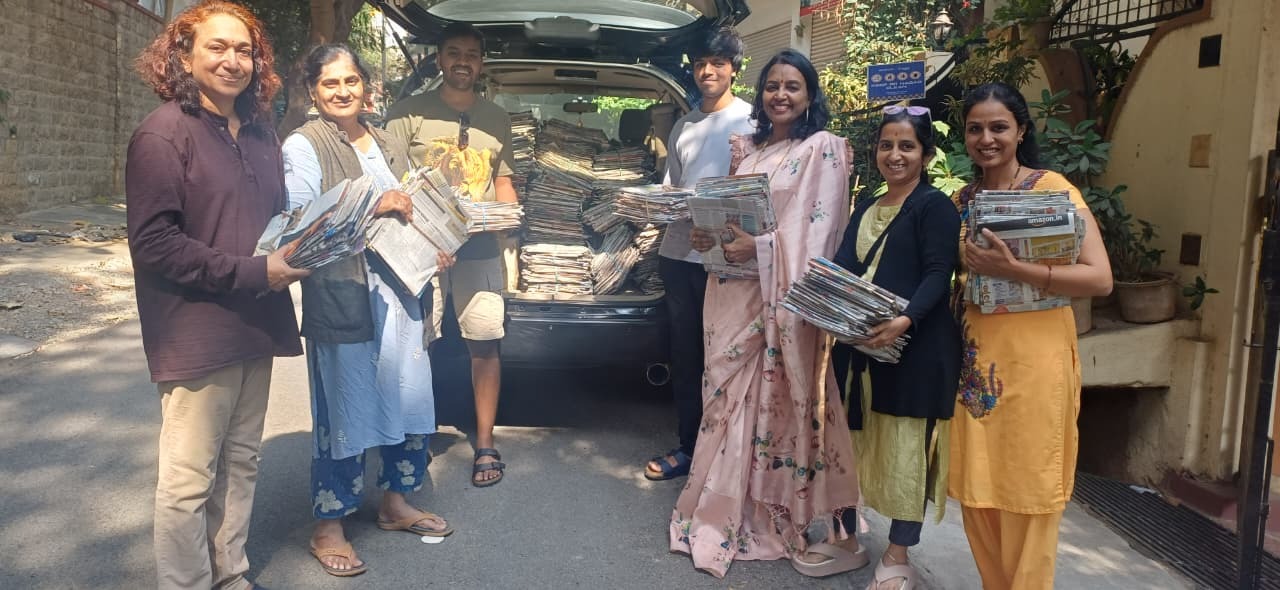
Making the bags was the main part of the work. The team used newspapers from local shops and residents to make strong paper bags. They also used donated cloth, like sarees, curtains, and bedsheets, to sew reusable bags known locally as “kai cheele.” Additionally, brown paper covers already in the neighborhood were collected and reused.
In total, the group produced and distributed over 16,500 bags before and during the festival. This effort proved that a community can produce enough materials for a large event without needing factory supplies or outside funding. To help vendors switch, cloth bags were provided for only Rs. 2 each, making them very affordable.
School and Student Engagement
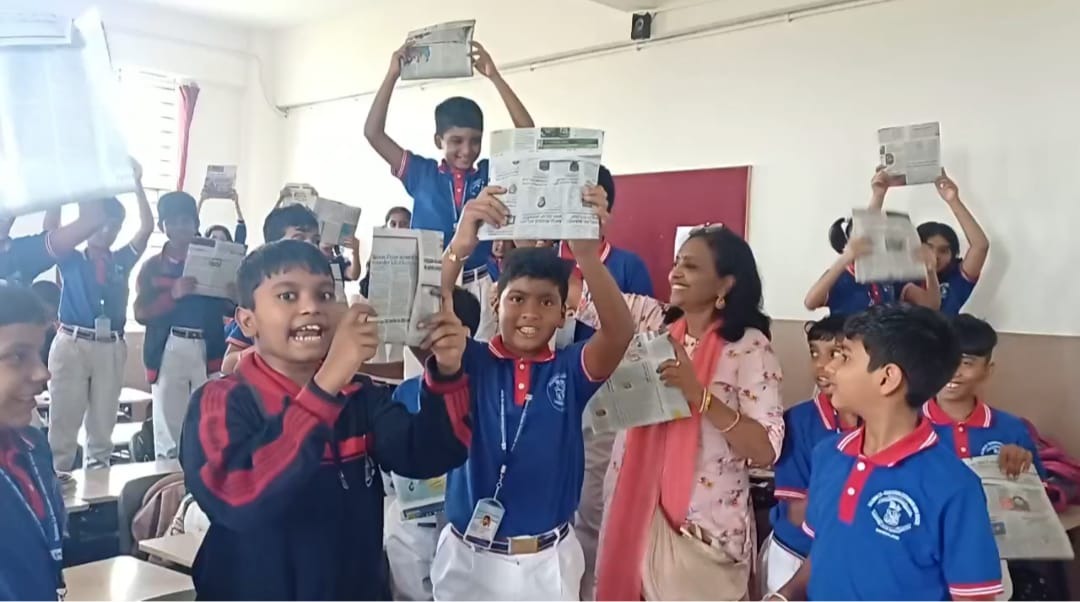
Seven schools and an engineering college served as centers for making the bags. During workshops, students learned how to fold, stitch, and finish durable paper and cloth bags. They also discussed practical issues, such as why plastic stays in the environment for so long and how festival waste affects the city.
This approach helped students understand the purpose of their work. Many student teams also helped distribute the bags and show visitors how to use them during the festival. Because they were from the local community, they were very effective at encouraging others to change their habits.
Over 2,000 students participated in these workshops. This helped the project reach thousands of local households as students shared the learnings with their families.
Vendor Partnership and Adoption Support
Working with vendors was a key part of the project. Instead of just telling them about plastic bans, the team worked with them to find practical solutions. The focus was on showing that using alternatives is easy to do and makes sense for their business.
To help vendors switch, cloth bags were sold for Rs. 2 each. This price was low enough for vendors to afford while covering the basic costs of making them. The team also gave out free “starter packs” to vendors willing to try the new bags. Volunteers visited stalls to show vendors how to use the cloth bags and how to talk to customers about them. This direct support was more effective than just giving vendors a list of rules.
During the festival, the team visited stalls to offer support. If volunteers found plastic bags, they helped the vendor replace them with paper or cloth alternatives right away. This approach encouraged vendors to cooperate because they felt supported rather than pressured.
Community Mobilisation
Local residents played a key role in the project. People donated old clothes and fabric scraps from their homes, which meant the team did not have to find or buy materials from outside sources. Many neighbors also joined sessions to help make the bags, motivated either by a desire to help the environment or simply by the spirit of working together. Information shared through neighborhood groups, school networks, and social media helped get more people involved. By the time the festival began, many people in the area knew about the project and were ready to support it.
OUTPUTS: DIRECT, COUNTABLE DELIVERABLES
The project achieved results in several key areas. The team produced and distributed more than 16,500 paper and cloth bags to vendors and visitors. Workshops in seven schools reached 2,000 students, who helped make the bags and learned about managing waste. The team also worked with a large number of the shops and street vendors throughout the festival area.
Feedback was collected from both vendors and visitors through surveys, conversations, and observations. This information was used to understand what worked well and what could be improved. These results helped make it easier for people to choose sustainable options and provided a foundation for future community efforts.
OUTCOMES: WHAT CHANGED DURING THE FESTIVAL
During the festival, there was a noticeable decrease in the use of plastic bags compared to previous years. Vendors felt more confident using alternatives because they were affordable, easy to get, and backed by practical support from the team. By making the bags and talking about waste management, students took a lead role and shared these ideas with their families, which made the project’s message more effective and trusted.
The community also became more involved. Instead of feeling like they had to follow strict rules, residents and vendors saw the initiative as a shared project they were part of. Vendors did not lose money or experience major disruptions to their work. In fact, some found that cloth bags were a good way to start conversations with customers and build better relationships. The project showed that it is possible to reduce waste while still supporting the people working at the festival.
IMPACT: WHY THIS MATTERS BEYOND ONE FESTIVAL
Environmental Impact
The project decreased the amount of single-use plastic at the festival. While the exact volume is difficult to measure without a baseline, observations and waste checks showed a clear reduction. The initiative also showed how local materials can be reused and upcycled. This demonstrated that waste can be turned into a resource through careful planning and community effort.
Social Impact
The initiative demonstrated a pathway to environmental compliance-one that protects vendor livelihoods while enabling meaningful behaviour change. This is particularly important in the Indian context, where informal and small-scale vendors are often disproportionately affected by top-down environmental regulations. By positioning vendors as partners and providing affordable alternatives, the initiative showed that sustainability need not come at the cost of economic equity.
Students were positioned as credible change agents rather than passive recipients of awareness campaigns imposed by adults. This is a subtle but profound shift. It builds agency, competence, and intrinsic motivation-qualities that are likely to sustain behaviour change long after the festival ends.
System Impact
The intervention created a replicable model for other festivals and public events. The blueprint comprises five interlocking components: an alternative supply chain built from locally sourced, often-waste materials; school mobilisation that embeds production and learning; vendor onboarding that treats merchants as partners; on-ground nudges and support during the event; and systematic feedback capture to fuel continuous improvement. Other event organisers, civic authorities, and sustainability practitioners can adopt and adapt this model to their own contexts.
RISKS AND LESSONS: WHAT TO IMPROVE NEXT TIME
The team’s candid reflection on challenges and learnings strengthens both credibility and the likelihood of successful replication.
Time compression is a real risk.
While eight weeks was enough to get the work done, it felt rushed. Beginning the preparation even earlier would allow for better quality control and more time to talk to vendors. Starting too late can lead to volunteer burnout and vendors feeling unprepared for the change.
Behaviour change beyond the festival requires post-event reinforcement.
One event is not enough to change habits permanently. To keep the momentum going, it is important to follow up through schools and local groups after the festival ends. Without a plan for what happens next, there is a risk that people will go back to using plastic once the event is over.
Wider vendor coverage requires structured planning.
The team reached many vendors, but not all of them. To include more people next time, a more structured sign-up plan and a reliable way to restock bags during the festival are needed. Vendors must be sure they will not run out of alternatives in the middle of a busy day.
Measurement improves credibility and learning.
It is difficult to know exactly how much plastic was reduced without a starting count. In the future, using simple methods like counting bags in bins or interviewing a specific group of vendors before and after the event will provide clearer information. This data will make it easier to compare results year after year and improve the project.
REPLICATION BLUEPRINT: CARRYING THE MODEL FORWARD
For other public events and festivals seeking to reduce plastic waste while protecting vendor interests, the following blueprint offers a starting template.
- Start planning 6 to 8 weeks before the event. Form a team that includes residents, environmental groups, vendors, and local institutions. Decide early who is responsible for specific tasks and how decisions will be made to avoid delays.
- Set up a way to get materials and set specific goals for how many bags you need. Find local sources for old newspapers, scrap cloth, and paper covers. Create a schedule for making the bags so there is enough stock before the event begins.
- Partner with schools and colleges in the area. Set up workshops where students learn to make bags while also discussing how waste affects their city. Encourage students to take an active role in the project.
- Start talking to vendors several weeks before the festival. Identify all the businesses that will be there and show them samples and pricing for the alternative bags. Giving free starter packs to vendors who join early can help encourage others to follow.
- During the event, have volunteers available to solve problems as they happen. This includes checking bag stocks, answering vendor questions, and helping visitors understand the change. Use signs and volunteer interactions to encourage people to use the new bags.
- Keep track of how many bags are handed out and gather feedback from vendors and visitors every day. After the event, meet with volunteers and vendors to talk about what worked and what could be better
- Write down how the project worked and share it with city officials, other event organizers, and community groups. Holding a meeting to discuss the results helps others learn from the experience and use it for their own events.
CONCLUSION
The work at Kadale Kai Parishe shows that making a public event more sustainable does not require a large budget or specialized infrastructure. By involving the community and providing practical alternatives that are as easy to use as plastic, the festival can maintain its traditions and support local businesses while reducing its environmental impact. Treating vendors and residents as partners rather than just people who must follow rules was key to this success.
The success of this project came from practical planning, working together, and making it simple for people to choose sustainable options. As cities deal with the waste from large events, this project provides a clear example of how to use local materials and community support to address the issue. It shows that when vendors and residents are supported and involved in the process, they are willing to choose better options for the environment.
The process for other festivals is now established. The next step is to see how quickly these methods can be used at more events and become a standard part of how public celebrations are managed.
This case study was researched and documented by SAGE Sustainability in partnership with Hasiru Sele and the Zero Waste Collective.

